 Kedi Healthcare
Women's Health in Nigeria: Painful Periods, PID & What You Need to Know (2026)

In Nigeria, a woman waking up doubled over in pain on the first day of her period is not unusual — it is so common that many Nigerian women believe it is simply what periods are supposed to feel like. They push through work, school, and family responsibilities while managing cramps that, in some cases, are severe enough to require hospitalisation.
This normalisation of pain is dangerous. Painful periods, irregular cycles, pelvic inflammatory disease (PID), and vaginal infections are among the most common — and most undertreated — health conditions affecting Nigerian women. Research published in Nigerian medical journals estimates that over 60% of Nigerian women of reproductive age experience dysmenorrhea (painful periods) severe enough to affect daily functioning. PID is believed to affect at least 1 in 8 sexually active Nigerian women at some point in their reproductive years.
Yet most women receive no treatment. They buy painkillers, apply heat, and wait it out — month after month, year after year. This article breaks down what is actually happening in your body, which symptoms deserve medical attention, and what natural options exist to support women's reproductive health in Nigeria.
Understanding Dysmenorrhea: Why Periods Hurt So Much
Dysmenorrhea — the medical term for painful menstruation — comes in two forms that Nigerian women need to understand clearly, because they have very different causes and treatments.
Primary Dysmenorrhea
This is menstrual pain that occurs without any underlying disease. During your period, the uterus produces chemicals called prostaglandins that cause the uterine muscle to contract, pushing the lining out. In women with primary dysmenorrhea, prostaglandin levels are significantly elevated, causing cramping that ranges from uncomfortable to incapacitating. The pain typically begins a few hours before bleeding starts and peaks in the first 24–48 hours of the period.
Primary dysmenorrhea is most intense in young women in their teens and twenties and often improves after a first pregnancy — though this is not a medical recommendation. Contributing factors include poor nutrition (especially low magnesium and omega-3 intake), high stress, lack of exercise, and smoking.
Secondary Dysmenorrhea
This is menstrual pain caused by an underlying reproductive condition. In Nigeria, the most common causes are uterine fibroids (benign growths in or on the uterus), endometriosis (where uterine tissue grows outside the uterus), and pelvic inflammatory disease (which we'll discuss in detail below). Secondary dysmenorrhea tends to worsen over time, may begin a week or more before the period, and does not respond well to standard painkillers alone.
- Pain that is worsening year-on-year, not staying the same or improving
- Pain that begins more than 2 days before your period
- Pain during sex (dyspareunia)
- Heavy bleeding with clots larger than a 50 kobo coin
- Bleeding that lasts longer than 7 days
- Spotting or bleeding between periods
Irregular Menstruation & Hormonal Imbalance in Nigeria
A normal menstrual cycle runs between 21 and 35 days, with bleeding lasting 3–7 days. Any cycle consistently shorter or longer than this range, or periods that vary wildly from month to month, is considered irregular. Irregular periods are extremely common among Nigerian women, and they are almost always rooted in hormonal imbalance.
The key hormones driving the menstrual cycle are oestrogen and progesterone, produced in the ovaries, regulated by the pituitary gland in the brain. When this hormonal axis is disrupted, the cycle goes wrong. Common causes of hormonal disruption in Nigeria include:
- Stress: Chronic stress elevates cortisol, which suppresses the pituitary signals that trigger ovulation. Many Nigerian women in high-pressure work or domestic environments experience stress-related cycle irregularity.
- Rapid weight changes: Both obesity and rapid weight loss disrupt oestrogen production. Nigeria's rising rates of obesity are contributing to more hormonal disorders.
- Polycystic Ovary Syndrome (PCOS): A hormonal disorder affecting an estimated 10–15% of Nigerian women of reproductive age, PCOS causes irregular or absent periods, excess androgen, and often multiple small cysts on the ovaries.
- Thyroid disorders: Both an underactive and overactive thyroid disturb the menstrual cycle. Thyroid disease is significantly underdiagnosed in Nigeria.
- Nutritional deficiencies: Iron deficiency anaemia (very prevalent in Nigeria due to heavy menstrual bleeding and dietary patterns) and low vitamin D levels both impair hormonal function.
If your periods have been irregular for more than three consecutive months, it is worth getting a hormonal panel done — not simply "waiting for it to regulate itself." Untreated hormonal imbalance affects not only your cycle but also your mood, weight, bone health, and long-term fertility.
Pelvic Inflammatory Disease (PID): The Silent Destroyer of Female Fertility in Nigeria
PID is an infection of the female reproductive organs — specifically the uterus, fallopian tubes, and ovaries — that develops when bacteria travel upward from the vagina or cervix. It is one of the most serious, and most frequently missed, women's health conditions in Nigeria.
What Causes PID?
PID is most commonly caused by sexually transmitted infections (STIs), particularly chlamydia and gonorrhoea, which are prevalent but dramatically underdiagnosed in Nigeria because they often produce no symptoms in their early stages. When left untreated, these bacteria spread upward into the uterus and tubes, causing inflammation, scarring, and irreversible damage.
Other causes include bacterial vaginosis (where the natural vaginal bacterial balance is disturbed) and post-procedure infections following dilation and curettage (D&C), unsafe abortion, or childbirth. PID is also associated with multiple sexual partners and early sexual debut.
Symptoms of PID in Nigerian Women
- Dull, persistent lower abdominal or pelvic pain — often worse during or after sex
- Unusual vaginal discharge, often yellow or green with an unpleasant odour
- Irregular or unusually heavy bleeding
- Fever (sometimes mild, sometimes high)
- Pain or a burning sensation during urination
- Fatigue and general malaise
The challenge is that PID symptoms vary widely. Many women with PID have only mild or intermittent discomfort — not the acute pain you might expect from a pelvic infection. This is why it gets missed and undertreated until significant damage has already occurred.
Why PID Is a Fertility Emergency
When the fallopian tubes are repeatedly inflamed and scarred by PID, they can become partially or fully blocked — preventing eggs from being fertilised or causing them to implant in the tube rather than the uterus (ectopic pregnancy, which is life-threatening). Studies in Nigerian tertiary hospitals consistently find that 40% or more of female infertility cases are attributable to tubal damage from previous PID. Most of these women had no idea they had PID.
If you have any of the symptoms listed above, do not self-medicate with random antibiotics from a pharmacy. PID requires a specific antibiotic regimen prescribed by a doctor after proper diagnosis. Incomplete or incorrect antibiotic treatment leaves infection behind and continues the damage.
Vaginal Infections & Abnormal Discharge in Nigeria
Vaginal discharge is normal — the vagina is a self-cleaning organ, and a clear or slightly white, odourless discharge throughout the cycle is healthy. What is not normal is discharge that is:
- Thick and white, resembling cottage cheese → likely a yeast infection (candidiasis), caused by Candida overgrowth
- Grey or white with a fishy odour → likely bacterial vaginosis (BV), the most common vaginal infection in Nigeria
- Yellow, green, or frothy → may indicate a sexually transmitted infection such as trichomoniasis or gonorrhoea
- Blood-tinged outside of menstruation → warrants immediate medical evaluation
In Nigeria, self-treatment of vaginal infections with over-the-counter antifungals is common — but antifungal creams only work for yeast infections, not for bacterial vaginosis or STIs. Using antifungal treatment for BV or an STI does nothing to clear the infection and delays proper care. If your discharge is recurring or you are unsure what type of infection you have, please see a doctor or visit a sexual health clinic for a proper swab test.
How These Conditions Are Connected
Painful periods, hormonal imbalance, PID, and vaginal infections do not exist independently — they are frequently interlinked. Bacterial vaginosis significantly increases the risk of developing PID. Hormonal imbalance can worsen menstrual pain and suppress the immune defences of the vaginal environment, making infections more likely. Type 2 diabetes, increasingly common in Nigerian women, impairs immune function and dramatically increases susceptibility to yeast infections and bacterial vaginosis. Chronic hypertension and the medications used to treat it can also alter the vaginal environment.
This is why treating the whole body — not just the individual symptom — matters so much for women's health. A woman managing her blood sugar, maintaining a healthy weight, eating an iron-rich diet, reducing stress, and supporting her immune system will have far better reproductive health outcomes than one taking a painkiller once a month and ignoring everything else.
When Must You See a Doctor?
Natural support, lifestyle changes, and herbal supplements play a genuine role in women's health — but some situations require immediate medical attention. You must see a doctor if:
- You suspect PID (pelvic pain, fever, abnormal discharge together) — this needs antibiotics
- You have bleeding outside your normal period or after sex
- Your periods have stopped for 3+ months without pregnancy
- You have been trying to conceive for 12 months (6 months if over 35) without success
- You have a lump or swelling in the lower abdomen
- You experience severe, sudden pelvic pain (potential ectopic pregnancy)
The products discussed below are meant to complement medical care, not substitute for it where medical care is needed.
Kedi Women's Health Support
Two NAFDAC-registered herbal formulas specifically targeting menstrual pain, irregular cycles, and pelvic inflammation — available nationwide with delivery across Nigeria.
Order via WhatsApp →Natural Support for Women's Reproductive Health: Kedi's Approach
Traditional Chinese Medicine (TCM) has developed specific herbal formulations for women's reproductive health over centuries of clinical practice. Two of Kedi Healthcare's most important women's health products — both fully NAFDAC-registered — draw on this tradition to address the most common conditions Nigerian women face.
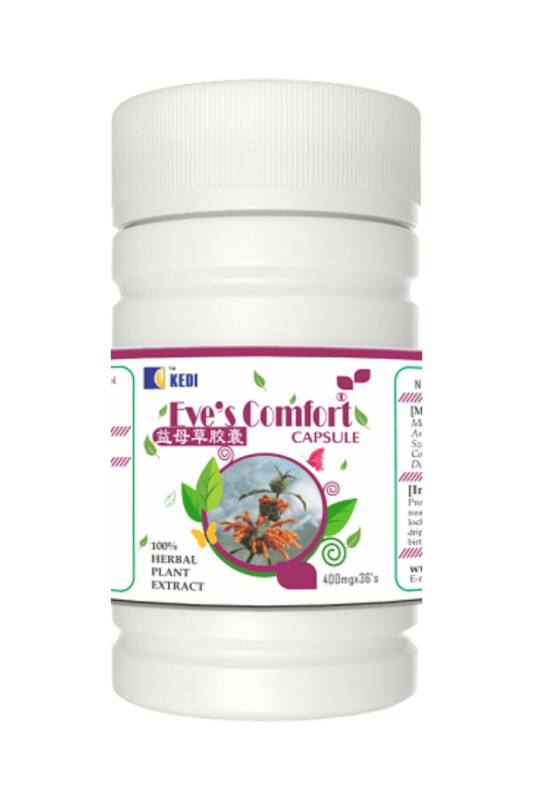
Kedi Eve's Comfort Capsule
Eve's Comfort is formulated specifically for menstrual pain (dysmenorrhea) and irregular periods caused by blood stasis — a TCM concept describing sluggish blood flow through the uterus and pelvis that underlies many types of menstrual pain. It is also indicated for lochiorrhoea (prolonged bleeding or discharge after childbirth) and subinvolution of the uterus (where the uterus is slow to return to its normal size after delivery).
Key ingredients: Motherwort (Yi Mu Cao) — a uterine tonic that improves pelvic blood flow and reduces uterine cramping; Angelica Sinensis (Dang Gui) — the premier women's herb in TCM, used for centuries to regulate the menstrual cycle and nourish the blood; Szechuan Lovage Rhizome (Chuan Xiong) — enhances circulation and relieves pain; Costustoot — anti-inflammatory and analgesic; Donkey-hide Glue (E Jiao) — a blood tonic that addresses anaemia associated with heavy menstrual bleeding.
Together, these herbs work to improve uterine circulation, reduce prostaglandin-driven cramping, regulate cycle length, and address the iron-deficiency component of heavy periods. Women taking Eve's Comfort typically notice reduced menstrual pain within the first 1–2 cycles, with more significant improvements in regularity by months 2–3.
Order Eve's Comfort — ₦24,900
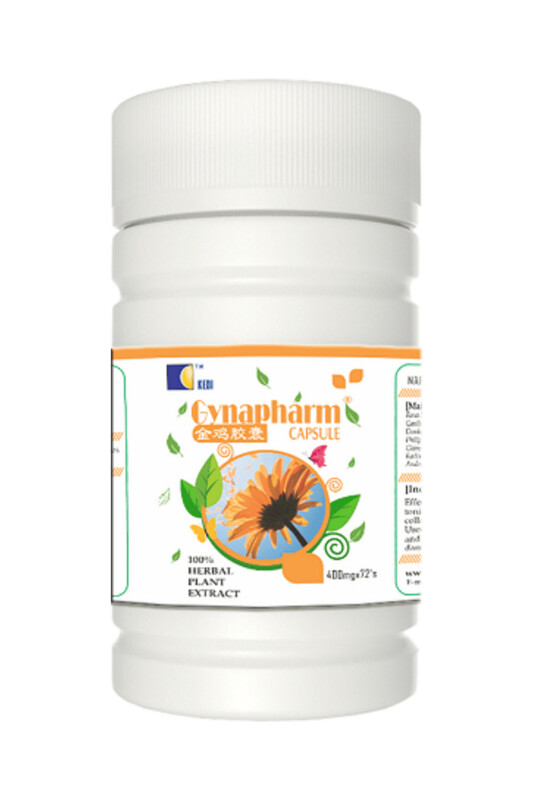
Kedi Gynapharm Capsule
Gynapharm is formulated specifically for pelvic inflammatory conditions — annexitis (inflammation of the fallopian tubes and ovaries), endometritis (inflammation of the uterine lining), and pelvic inflammation driven by what TCM describes as "downward flow of damp heat." This corresponds closely to the bacterial and inflammatory environment seen in PID and chronic pelvic infections.
Gynapharm provides anti-inflammatory and antimicrobial herbal support to help reduce pelvic inflammation, support tissue healing, and create an environment less hospitable to recurrent infection. It is not a replacement for antibiotic treatment of acute PID — if you are in the acute phase of a pelvic infection, antibiotics prescribed by a doctor come first. Gynapharm is most useful as a complement to antibiotic therapy and for ongoing support during the recovery and maintenance phase to reduce the risk of recurrence.
Many Nigerian women with a history of PID or recurrent pelvic infections have used Gynapharm as part of a longer-term management strategy, alongside lifestyle adjustments and regular monitoring by their gynaecologist.
Order Gynapharm — ₦33,000
Lifestyle Strategies That Support Women's Reproductive Health in Nigeria
Beyond supplementation, the evidence for dietary and lifestyle interventions in women's reproductive health is strong. The following measures are accessible, practical, and effective for most Nigerian women:
- Iron-rich diet: Heavy menstrual bleeding depletes iron rapidly. Nigerian women should prioritise foods rich in haem iron — beef, goat meat, offal (liver especially), and fish — combined with vitamin C-rich foods to boost absorption. Palm oil, garden egg, ugu leaves, and bitter leaf are excellent plant-based iron sources.
- Reduce refined carbohydrates and sugar: High sugar intake drives systemic inflammation, worsens PCOS symptoms, promotes yeast overgrowth in the vagina, and disrupts hormonal balance. Nigerian women with irregular periods, recurrent yeast infections, or PCOS should significantly reduce soft drinks, packaged biscuits, white bread, and other refined carbs.
- Manage stress actively: Sustained high cortisol is one of the most potent suppressors of healthy menstrual cycling. Prayer, rest, light exercise (walking, yoga), social support, and deliberately cutting back overcommitment are all legitimate interventions — not luxuries.
- Exercise regularly: Even 30 minutes of moderate walking 5 days a week reduces systemic inflammation, improves insulin sensitivity (relevant for PCOS), and has been shown in studies to significantly reduce dysmenorrhea severity.
- Safe sexual practices: Consistent condom use substantially reduces the risk of STIs that cause PID. Regular STI screening — even when asymptomatic — is an important preventive measure that most Nigerian women do not practise regularly enough.
- Avoid douching: The practice of vaginal washing or douching with soap, antiseptic, or herbal preparations disrupts the natural pH and beneficial bacteria of the vagina, dramatically increasing the risk of bacterial vaginosis and ascending infections. External washing only — never internal.
A Note on Fibroids
Uterine fibroids — benign muscle tumours of the uterus — deserve special mention because they are exceptionally prevalent among Nigerian women. Research suggests Nigerian women develop fibroids at higher rates, at younger ages, and with greater severity than women of other ethnicities globally. Fibroids are a leading cause of heavy periods, prolonged bleeding, pelvic pressure, frequent urination, and certain types of infertility in Nigeria.
If you experience very heavy periods (soaking more than one pad per hour for several consecutive hours), a visibly swollen lower abdomen, frequent urination, or pelvic pressure, an ultrasound scan is essential to rule out fibroids. Small fibroids may be monitored; larger ones may require surgical intervention. Dietary strategies — particularly reducing red meat and increasing green vegetables — and managing oestrogen levels (which fuel fibroid growth) are the key lifestyle approaches supported by evidence.
Kedi Eve's Comfort Capsule is not a fibroid treatment, but its role in improving pelvic blood flow and reducing menstrual pain may provide supportive benefit for women managing fibroids alongside their specialist's care plan.
Ready to Support Your Reproductive Health?
Order Kedi Eve's Comfort Capsule (₦24,900) or Gynapharm (₦33,000) directly via WhatsApp. Nationwide delivery — Lagos, Abuja, Port Harcourt, Enugu, Ibadan, Kano and everywhere in between.
Chat with us on WhatsApp →